Antibody-drug Conjugates
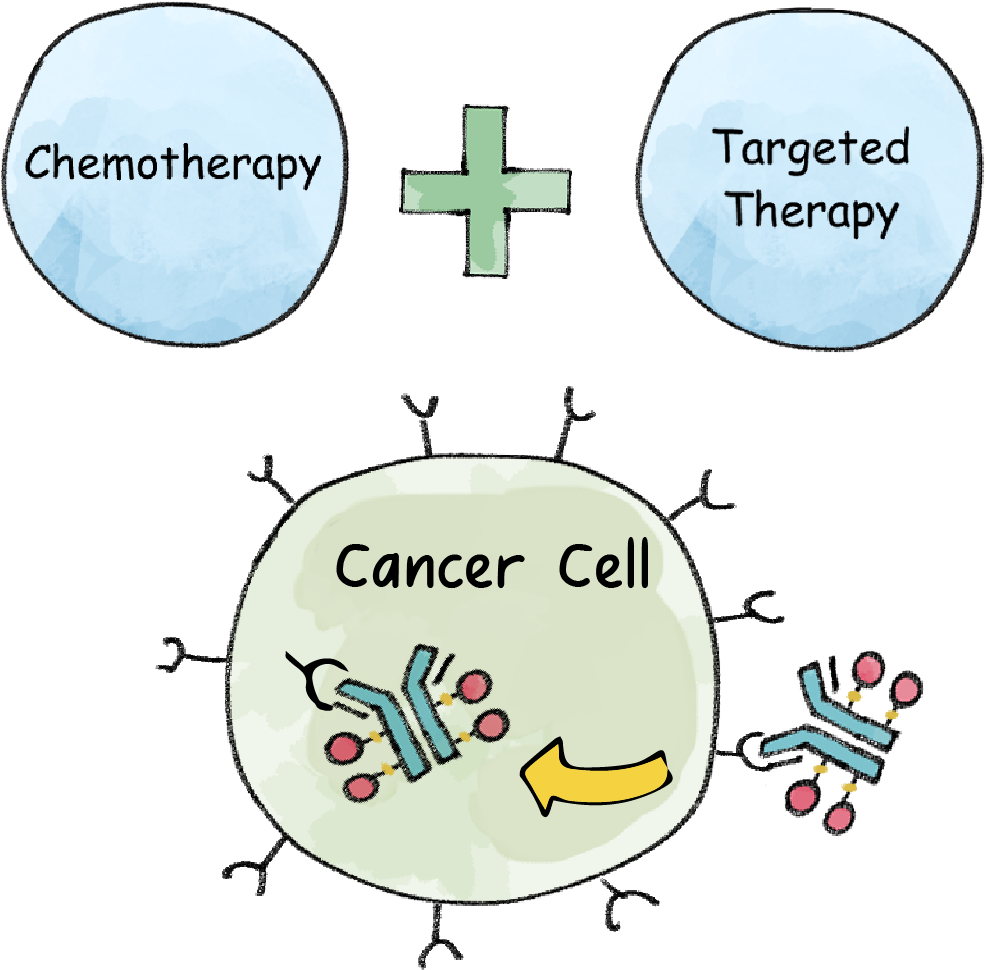
Antibody-drug conjugates (ADCs) target certain cancers that come back or spread, or are used when other treatments don’t work by combining chemotherapy and targeted therapy. ADCs are designed to selectively bind and attack cancer cells and work by combining 1) antibodies, which are proteins produced by your immune system and attach and remove antigens (foreign substances) from your body 2) drugs that destroy cancer and 3) a linker protein (connects 1 and 2 as the drugs target the tumor).
What You Need to Know
ADCs demonstrate the importance of precision medicine in lung cancer treatment. These innovations highlight how specific biomarkers allow for personalized treatments and the need for more comprehensive biomarker testing and identification. Ongoing research is being done to explore the potential benefits and limitations of ADCs, both alone and in combination with other treatments. The study of ADC responses to specific biomarkers will provide a deeper understanding of the treatment's availability, how the drug works, and future direction of precision medicine.
In the drop-down below, you will find some of the most common side effects associated with antibody drug conjugates, along with ways to manage these side effects.
